
The eCommerce industry doesn’t stand still for long. Customer expectations keep rising. New technologies appear every year. Businesses that fail to adapt often struggle to keep up.
Adobe Commerce continues to evolve to meet these changing demands. What started as Magento has grown into a powerful commerce platform that supports global brands, B2B companies, plus growing retailers. Today, the focus is no longer just on building an online store. It is about creating shopping experiences that are faster, smarter, plus easier to manage.
Adobe Analytics processed more than 1 trillion visits to U.S. retail sites in its latest commerce analysis. This shows the scale of data shaping today’s eCommerce decisions.
Traffic from generative AI tools to retail websites increased by 693% during the 2025 holiday shopping season. AI is quickly becoming a major part of how customers discover and shop online.
If your business is planning a new Adobe Commerce project or looking to modernize an existing store, these are the trends worth paying attention to in 2026.
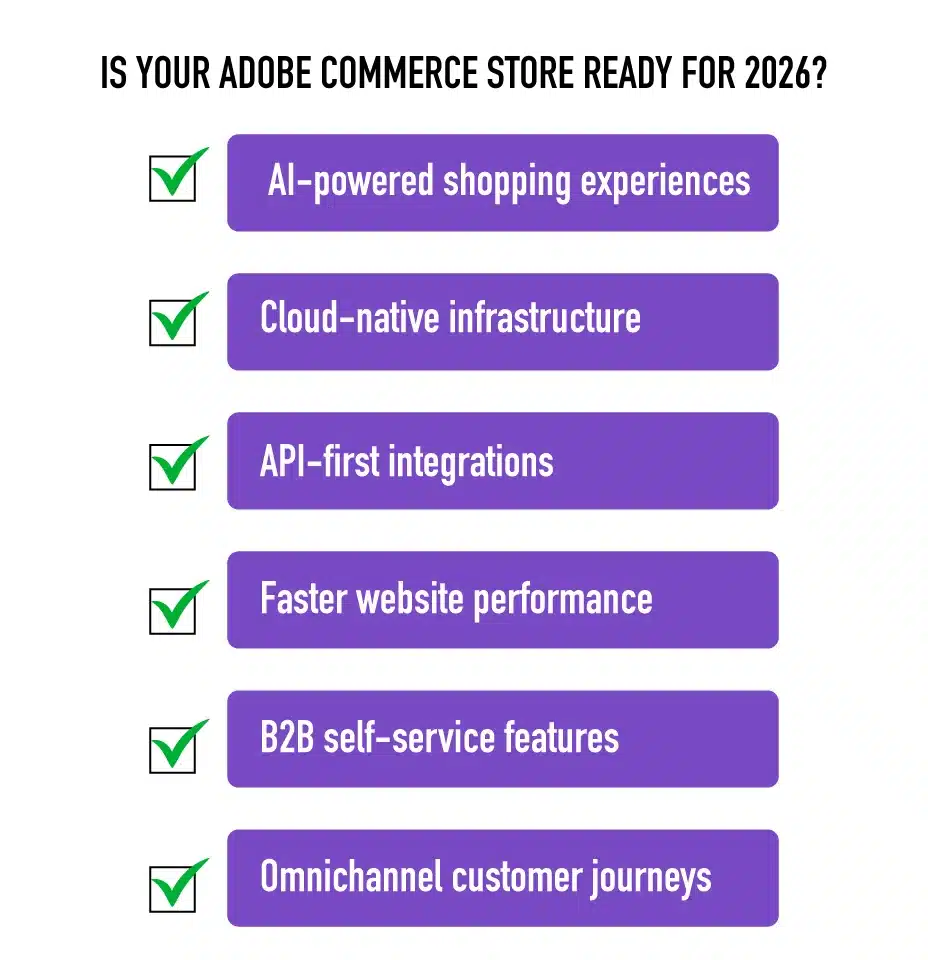
Quick self-check to assess your Adobe Commerce readiness for 2026.
AI Is Becoming Part of Everyday Commerce
Artificial intelligence has moved beyond being a future concept. It is now part of everyday business operations.
Think about the last time you searched for a product online. The recommendations you received probably matched your interests surprisingly well. That is exactly what customers expect today.
Adobe Commerce is helping businesses use AI in practical ways. Merchants can generate product descriptions more quickly, improve on-site search, recommend relevant products, plus automate repetitive work that once took hours.
AI also helps businesses understand customer behaviour. Instead of relying only on past sales reports, teams can identify shopping patterns earlier. This makes it easier to plan promotions plus deliver more relevant experiences.
The goal is simple. Spend less time on routine tasks. Spend more time growing the business.
Cloud-Native Commerce Is Becoming the Preferred Choice
Managing servers, software updates, plus infrastructure should not consume valuable business time.
This is one reason Adobe Commerce as a Cloud Service (ACCS) is attracting attention. It gives businesses a modern cloud-native platform that simplifies maintenance while improving scalability.
Stores can handle seasonal traffic more easily. Updates become simpler. New features can be introduced faster without lengthy deployment cycles.
For many businesses, this means technology becomes less of a daily concern. Teams can focus on improving the customer experience instead of maintaining infrastructure behind the scenes.
As online commerce continues to grow, cloud-native platforms are becoming the preferred choice for businesses that want long-term flexibility.
Flexible Commerce Is Replacing One-Size-Fits-All Platforms
Every business has different priorities.
A fashion retailer manages thousands of seasonal products. A manufacturer may deal with complex pricing. A wholesaler focuses on large orders plus repeat customers.
Trying to solve every challenge with one fixed platform often creates limitations.
This is why composable commerce continues to gain momentum.
Adobe Commerce supports an API-first approach that allows businesses to connect the services they need without replacing the entire platform. Payment gateways, ERP systems, search tools, product information management solutions, plus CRM software can work together within one commerce ecosystem.
This flexibility makes future upgrades easier. Businesses can improve one part of the system without disrupting everything else.
Businesses that want to build custom commerce experiences can benefit from Magento Development Services. Expert developers can create solutions that match your business goals and future growth plans.
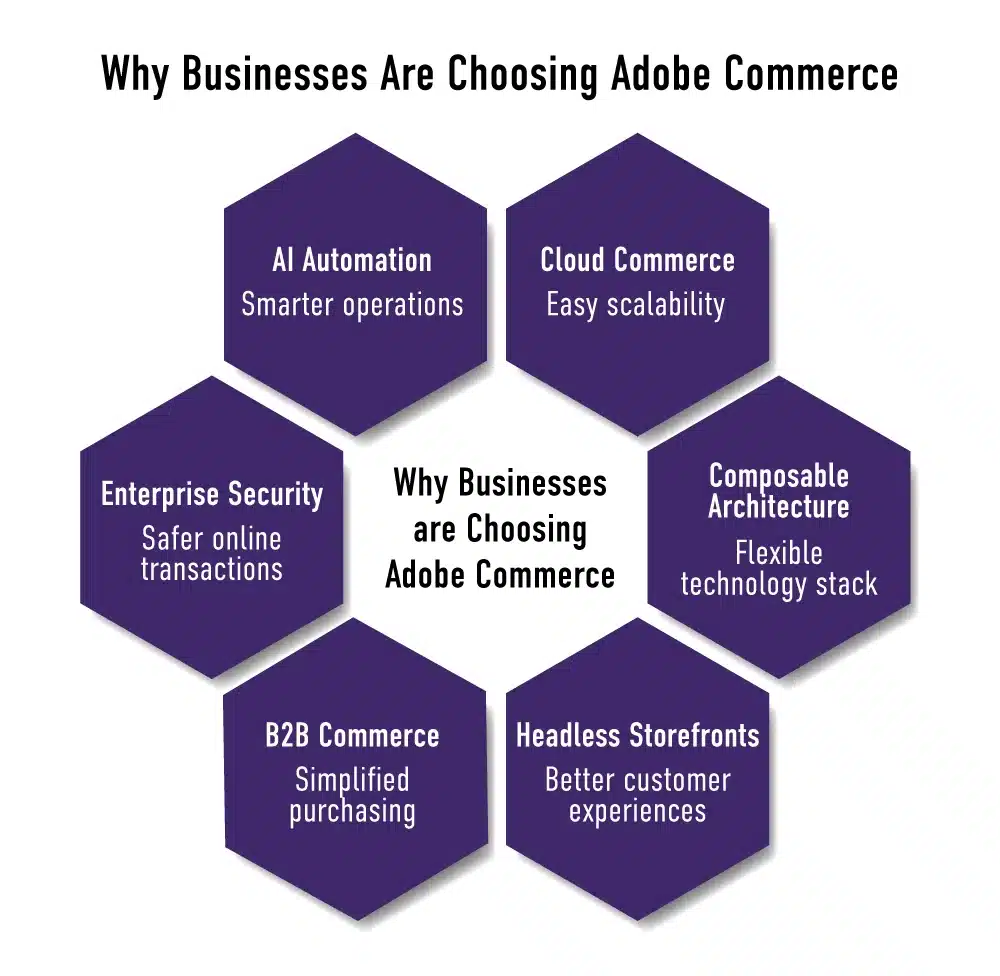
Simple overview of the capabilities driving modern Adobe Commerce success.
Customer Experience Continues to Drive Buying Decisions
A slow website, confusing navigation, or lengthy checkout process can quickly send shoppers elsewhere.
Businesses are responding by investing in faster storefronts, simpler navigation, plus personalized shopping experiences.
Headless commerce plays an important role here. By separating the storefront from the backend, developers gain more freedom to build modern digital experiences without affecting core commerce operations.
Customers rarely think about the technology behind an online store. They simply expect every page to load quickly. They expect product information to be accurate. They expect checkout to be smooth.
Businesses that deliver these experiences are more likely to earn repeat customers.
B2B Commerce Keeps Evolving
Business buyers expect the same convenience they experience when shopping online as consumers.
They want quick ordering, personalized pricing, simple account management, plus easy access to previous purchases.
Adobe Commerce continues to strengthen its B2B capabilities to support these expectations.
Features such as company accounts, shared catalogs, negotiated pricing, quote management, purchase approvals, plus self-service ordering help simplify complex buying processes.
These tools reduce manual work for sales teams while giving customers greater control over their purchasing journey.
For manufacturers, distributors, plus wholesalers, this creates a better experience for both employees and customers.
Businesses planning a new Adobe Commerce project can also benefit from Magento Consulting Services. Expert guidance helps you choose the right architecture and features for your business.
Security, Performance, Plus Omnichannel Commerce Remain Essential
Technology trends may change every year. Customer trust never goes out of style.
Businesses continue investing in stronger security to protect customer information while meeting industry standards.
Regular security updates, secure payment processing, data encryption, multi-factor authentication, plus PCI DSS compliance remain important parts of every Adobe Commerce strategy.
Performance also deserves attention.
Even a small delay during checkout can affect sales. Faster websites improve customer satisfaction while supporting better search visibility.
Customers also expect a connected shopping experience. They may discover a product on social media, compare options on a laptop, then complete the purchase from a mobile phone or collect it from a physical store.
Adobe Commerce helps businesses support this journey through omnichannel capabilities such as unified customer profiles, real-time inventory visibility, flexible fulfilment options, plus Buy Online Pick Up In Store (BOPIS).
Instead of treating every channel separately, businesses can create one connected commerce experience.
Final Thoughts
The future of Adobe Commerce is not defined by a single feature. It is shaped by how different technologies work together to improve the customer experience.
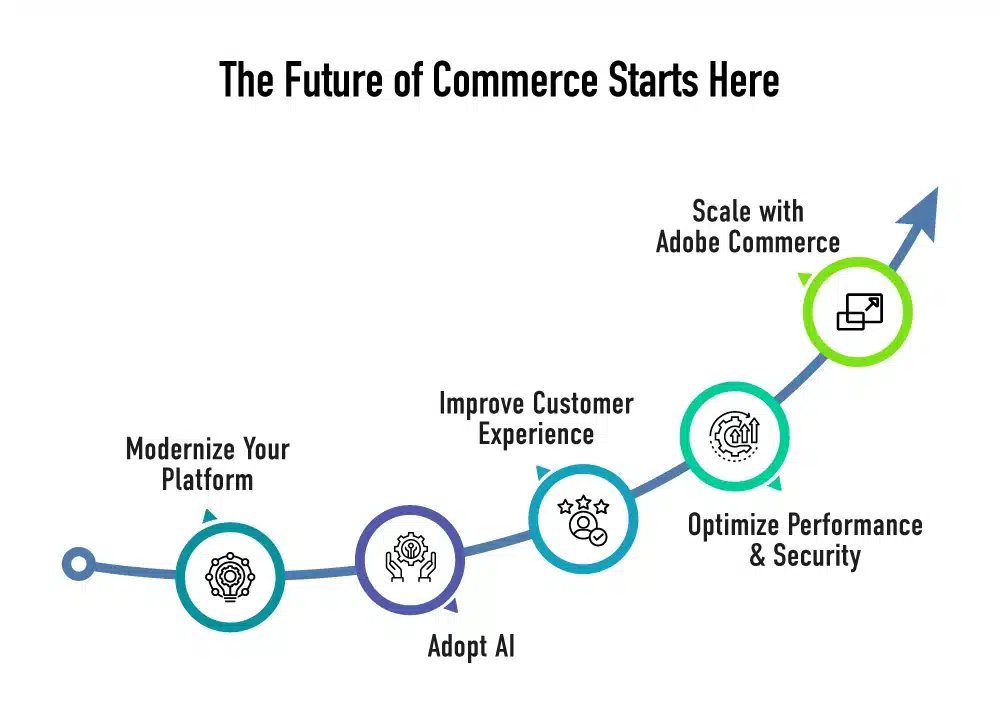
Step-by-step journey from digital modernization to scalable commerce growth.
Artificial intelligence is making daily operations more efficient. Cloud-native commerce is reducing maintenance. Composable architecture gives businesses greater flexibility. Better B2B capabilities support more complex buying journeys and stronger security plus faster performance help build customer confidence.
Not every trend will matter equally for every business. The right strategy depends on your customers, business goals, plus long-term plans.
Organizations that review these trends today will be better prepared to build scalable, future-ready commerce experiences in 2026 and beyond.
If you are upgrading from another platform, our Magento Migration Services help you move to Adobe Commerce with minimal disruption and a clear migration strategy.
Frequently asked questions
AI, cloud commerce, better security, B2B features, and faster customer experiences are leading the way.
It helps improve performance, security, scalability, and the overall customer experience.
ACCS is Adobe’s cloud-native platform built for faster updates and easier management.
AI helps personalize shopping, improve search, automate tasks, and support better business decisions.
Yes. It supports growing product catalogs, B2B commerce, and enterprise-level scalability.