Building an eCommerce store is a major investment. Every business has different goals. That means every Magento project has a different budget.
Magento continues to be one of the most trusted eCommerce platforms for growing businesses. It supports simple online stores and complex enterprise websites. The platform also gives businesses the flexibility to add new features as they grow.
According to Adobe, businesses use Adobe Commerce to build personalized shopping experiences across B2B and B2C channels. The platform also supports AI driven commerce capabilities and enterprise scale growth.
Baymard Institute reports that the average online shopping cart abandonment rate is nearly 70%. This shows why investing in the right platform and user experience is important for long term growth.
The total cost of a Magento store depends on many factors. Your platform edition, store design, integrations, custom features, and ongoing support all affect the final budget.
This guide explains every major cost involved in building a Magento eCommerce store in 2026. It will help you estimate your budget and make informed decisions before starting your project.
What Determines the Cost of a Magento eCommerce Store?
There is no fixed price for a Magento website. Every project is different. Your business goals decide how much you need to invest.
The first decision is choosing your Magento edition. Magento Open Source does not require a software license. Adobe Commerce includes advanced business features and commercial licensing.
The next factor is customization. A standard online store costs less than a store with custom workflows or business logic.
Design also affects your budget. Some businesses customize an existing theme. Others build a completely custom storefront.
Many stores also connect with ERP systems, CRM platforms, payment gateways and marketing tools. These integrations increase development effort.
Do not forget ongoing maintenance. Security updates, performance improvements, and technical support are part of the total cost of ownership.
Your total budget usually depends on:
- Magento edition
- Store design
- Custom development
- Third party integrations
- Extensions
- Data migration
- Testing
- Ongoing maintenance
If you are planning a new Adobe Commerce project, Ziffity’s Magento migration services team can help you estimate the right budget for your business.
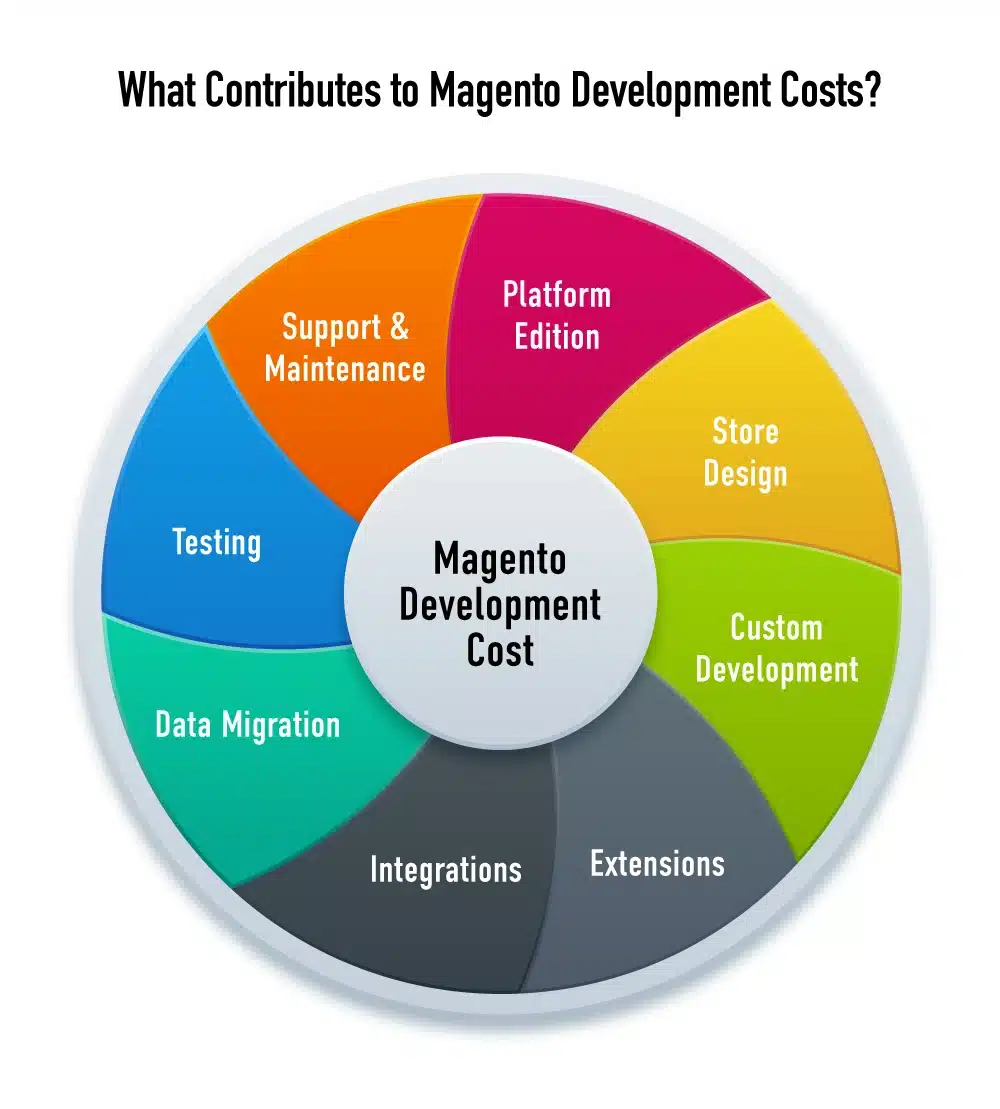
The key factors that influence overall Magento development costs.
Magento Open Source vs Adobe Commerce Pricing
One of the first decisions is choosing between Magento Open Source and Adobe Commerce.
Magento Open Source is free to download. Businesses still need to pay for hosting, development, security, and maintenance.
A typical Magento Open Source implementation starts at around $10,000 for a basic store. More advanced projects can range from $30,000 to $75,000 or more depending on customization and integrations.
Adobe Commerce is the premium version of Magento. It includes advanced B2B features, AI powered capabilities, customer segmentation, and enterprise tools.
Adobe no longer publishes fixed license pricing. Licensing is based on a custom commercial agreement. Industry estimates place Adobe Commerce licensing from around $22,000 per year for smaller businesses to more than $125,000 per year for large enterprises. Implementation costs are additional.
Choosing the right edition early helps avoid unnecessary migration costs later.
For businesses that need expert guidance before making this decision, Ziffity’s magento managed services can help evaluate the right platform based on your business goals.
Domain and Hosting Costs
Every Magento store needs a domain name and a hosting environment. These are two of the first costs you should plan for.
A domain name is your website address. Most businesses register a new domain that matches their brand. Premium domains can cost more because they are already owned or have high market value.
Hosting is where your Magento store runs. The right hosting plan depends on your store size and expected traffic.
Magento Open Source requires separate hosting. Adobe Commerce on Cloud includes cloud infrastructure as part of the platform. Adobe Commerce as a Cloud Service also provides managed cloud capabilities for enterprise businesses.
A low-traffic store needs fewer server resources but a large store with thousands of daily visitors needs a stronger hosting environment.
Typical costs include:
- Domain name: $10–$30 per year.
- Premium domain: $100 to several thousand dollars.
- Shared hosting: $20–$100 per month.
- Managed Magento hosting: $100–$500+ per month
- Enterprise cloud infrastructure: $1,000+ per month
Reliable hosting improves page speed and customer experience. It also reduces downtime during busy shopping seasons.
SSL Certificate Costs
Security is one of the most important parts of any eCommerce website.
An SSL certificate encrypts customer information. It protects payment details and personal data during every transaction. Modern browsers also warn customers when a website does not use HTTPS.
Adobe Commerce Cloud includes SSL support as part of its managed infrastructure. Magento Open Source users usually purchase and configure their own SSL certificate.
Many hosting providers now include free SSL certificates. Businesses with advanced security needs may choose premium certificates for support.
A secure website also improves customer trust. Search engines prefer secure websites which can also benefit SEO.
Typical SSL costs include:
- Standard SSL: Free to $100 per year.
- Organization Validation SSL: $100–$300 per year.
- Extended Validation SSL: $300–$1,000 per year.
Investing in security protects your business and your customers.
Store Design and UI Development Costs
Your storefront creates the first impression of your brand. A well designed website helps visitors find products and complete purchases more easily.
Magento offers free themes that businesses can customize. Premium themes are also available for brands that need a faster launch. Many growing businesses choose a fully custom design to create a unique shopping experience.
Custom design usually costs more because designers and developers build every page around your business goals.
Typical design costs are:
- Premium Magento theme: $100–$300
- Theme customization: $2,000–$8,000
- Custom UI/UX design: $5,000–$25,000+
Good design is not only about appearance. It also improves navigation and conversion rates.
A well designed Magento store makes shopping easier. That can lead to higher customer satisfaction and more completed purchases.
Magento Development Services Costs
Magento development is one of the biggest parts of your project budget. The final cost depends on the features you need and the complexity of your store.
A basic store with standard features requires less development time. A large store with custom workflows needs more planning and coding.
Many businesses also invest in custom checkout flows, advanced search, subscription models, loyalty programs, and personalized shopping experiences. Each feature adds to the total development effort.
Adobe Commerce projects often require experienced developers because they involve enterprise features.
Development costs typically range from:
- Small Magento store: $10,000–$30,000.
- Mid-sized business: $30,000–$80,000.
- Enterprise Adobe Commerce: $80,000–$250,000+
Choosing an experienced Magento development partner helps reduce rework and improves long term performance.
Extension and Marketplace Costs
Magento offers thousands of extensions that help businesses add new features without building everything from scratch.
Extensions can improve search, payments, shipping, customer support, marketing automation, analytics, and many other business functions.
Some extensions are free. Premium extensions require a one time payment or an annual subscription. Businesses should only install extensions that provide real business value.
Using too many extensions can affect website performance. It can also increase maintenance work during future upgrades.
Typical extension costs include:
- Free extensions.
- Premium extensions: $50–$1,000+ each.
- Custom extension development: $2,000–$20,000+.
If your business has unique requirements, custom development may be a better option than relying on multiple third party extensions.
Integration and Migration Costs
Most businesses need Magento to work with other business systems.
Common integrations include ERP platforms, CRM software, payment gateways and marketing tools. These connections improve business efficiency but also increase project costs.
The complexity of each integration depends on the systems involved and the amount of data that needs to be exchanged.
Magento migration services are another important cost factor. Businesses moving from Shopify, WooCommerce, BigCommerce, or another platform need to migrate products, customers, orders, content, and SEO data.
Older Magento 1 stores should also migrate to a supported version of Adobe Commerce or Magento Open Source. This helps improve security and gives access to the latest platform features.
Common integration costs include:
- Payment gateway: $500–$3,000
- ERP integration: $5,000–$30,000+
- CRM integration: $3,000–$20,000+
- Shipping integration: $500–$5,000
A well planned migration reduces business disruption and helps protect your search rankings.
Support and Maintenance Costs
Launching your Magento store is only the beginning. Regular maintenance keeps your website secure and performing well.
Adobe releases security updates and platform improvements throughout the year. Installing these updates helps protect your store from security risks and improves stability.
Support teams also monitor website performance. They fix bugs and resolve technical issues before they affect your customers.
Many businesses choose a dedicated support partner because it allows their internal teams to focus on sales and business growth.
Ongoing maintenance typically costs:
- Small stores: $500–$2,000 per month
- Growing businesses: $2,000–$5,000 per month
- Enterprise Adobe Commerce: $5,000–$15,000+ per month
Regular maintenance reduces downtime and helps your store perform consistently throughout the year.
Keep your Adobe Commerce store running smoothly with Ziffity’s Magento Managed Services.
Estimated Magento Store Development Cost
The table below provides a general estimate for Magento projects in 2026. Actual costs depend on business requirements and customization.
| Store Type | Estimated Cost |
|---|---|
| Magento Open Source (Basic) | $10,000–$30,000 |
| Magento Open Source (Advanced) | $30,000–$75,000 |
| Adobe Commerce | $75,000–$200,000+ |
| Enterprise Adobe Commerce | $200,000–$500,000+ |
Additional ongoing costs may include:
- Domain: $10–$30 per year.
- Hosting: $20–$1,000+ per month.
- SSL certificate: Free–$1,000 per year.
- Extensions: $50–$1,000+ each.
- Maintenance: $500–$15,000+ per month.
- Adobe Commerce license: Custom commercial pricing.
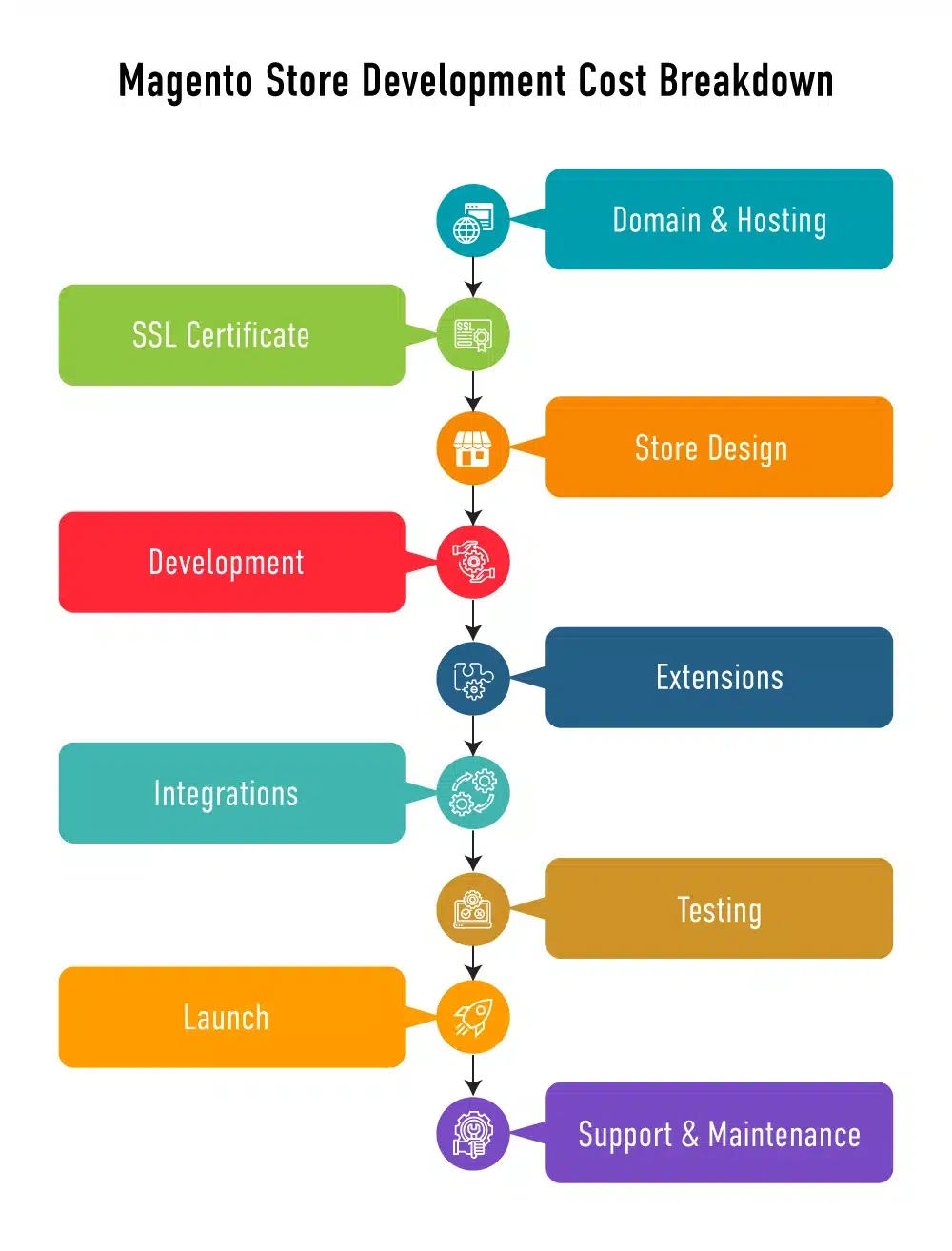
Every major expense involved in building a Magento online store.
How to Reduce Magento Development Costs
Building a Magento store does not always mean spending more. Careful planning can help you control your budget without affecting quality.
Start by listing the features your business needs for launch while additional features can be added in future development phases.
Choose extensions carefully. Installing unnecessary extensions increases maintenance work and may affect website performance.
Reuse existing business systems where possible. This reduces custom integration work.
Work with an experienced Magento partner from the beginning. Proper planning helps reduce rework and keeps the project on schedule.
You can reduce costs by:
- Defining project requirements early.
- Prioritizing essential features.
- Limiting unnecessary customizations.
- Selecting trusted extensions.
- Planning future upgrades in phases.
- Investing in regular maintenance.
A well planned Magento project delivers better value over the long term. It also creates a stronger foundation for future business growth.
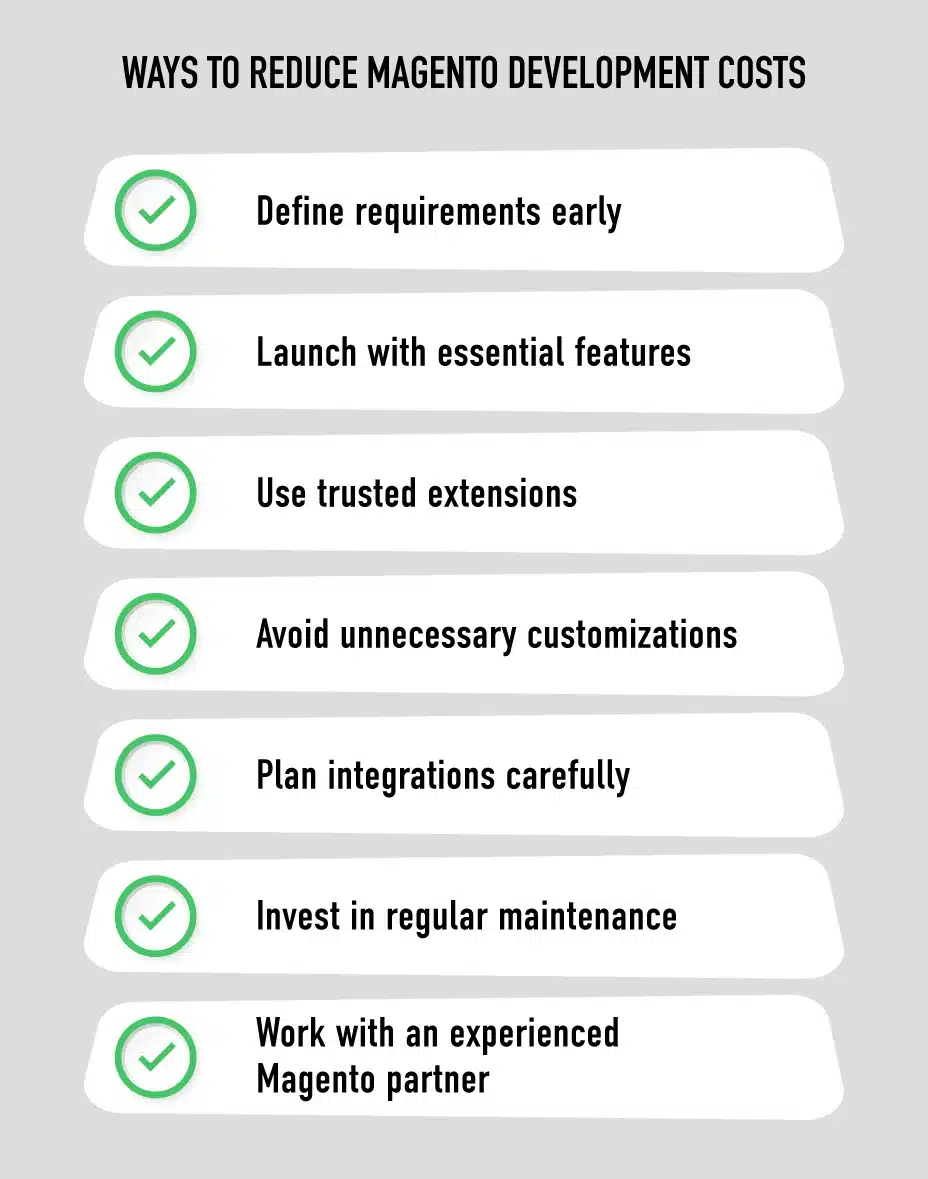
Reduce project costs with smarter planning and expert Magento implementation.
Final Thoughts
Building a Magento eCommerce store is an investment in your business’s future. The total cost depends on your goals and the features you need.
Magento Open Source is a strong choice for businesses that want flexibility without platform licensing costs. Adobe Commerce is ideal for businesses that need enterprise capabilities and advanced commerce features.
Before starting your project, define your business requirements clearly. This helps you choose the right platform and plan your budget with confidence.
Working with an experienced Magento partner also reduces project risks. A skilled team can recommend the right architecture, build scalable solutions, and support your business as it grows.
Ready to build or upgrade your Magento store? Explore Ziffity’s Magento development services and Magento migration services to discuss your project with our Adobe Commerce experts.
Frequently asked questions
The total cost depends on your business requirements. Your budget may include platform licensing, hosting, design, development, integrations, extensions, and ongoing maintenance.
Yes. Magento Open Source is free to download and use. However, businesses still need to pay for hosting, development, security, design, and support.
Adobe Commerce uses custom commercial pricing. The final license cost depends on your business requirements and your agreement with Adobe.
Custom features, third-party integrations, complex workflows, large product catalogs, and unique storefront designs can increase the overall project cost.
Businesses can reduce costs by defining project requirements early and working with an experienced Magento development partner.