By 2026, Gartner predicts that 75% of organizations will adopt a digital-transformation model built on cloud as the foundational platform. Adobe Commerce as a Cloud Service (ACCS) is Adobe’s strategic answer to that shift — a fully cloud-native commerce platform that removes upgrade cycles and frees brands to invest in growth. For eCommerce development teams, ACCS turns infrastructure work into growth work: faster launches, continuous updates, and AI-driven personalization.
If you look at the commerce industry today, SaaS-based platforms like Salesforce Commerce Cloud, Shopify Plus, and BigCommerce are becoming more common. They handle updates automatically and manage the underlying infrastructure, which reduces the day-to-day burden on IT teams. Companies still running older or hybrid systems often run into slow rollouts, scaling headaches, and extra maintenance work. For anyone planning digital commerce, it’s useful to understand these differences before choosing a platform.
In 2025, many organizations face pressure to expand digitally while holding costs steady. ACCS addresses that need. It combines Adobe’s track record in digital experience with the reliability of managed cloud delivery. Both B2B and B2C leaders can use it as a base for long-term growth. Many of them also rely on Adobe Commerce development services to make that shift smoother.
Why is Adobe Introducing ACCS Now?
Adobe’s release of ACCS is part of its plan to move enterprises away from legacy systems and into SaaS. The rollout is staged: June 25, 2025 for the Americas. August 2025 for EMEA. Q4 2025 for JPAC.
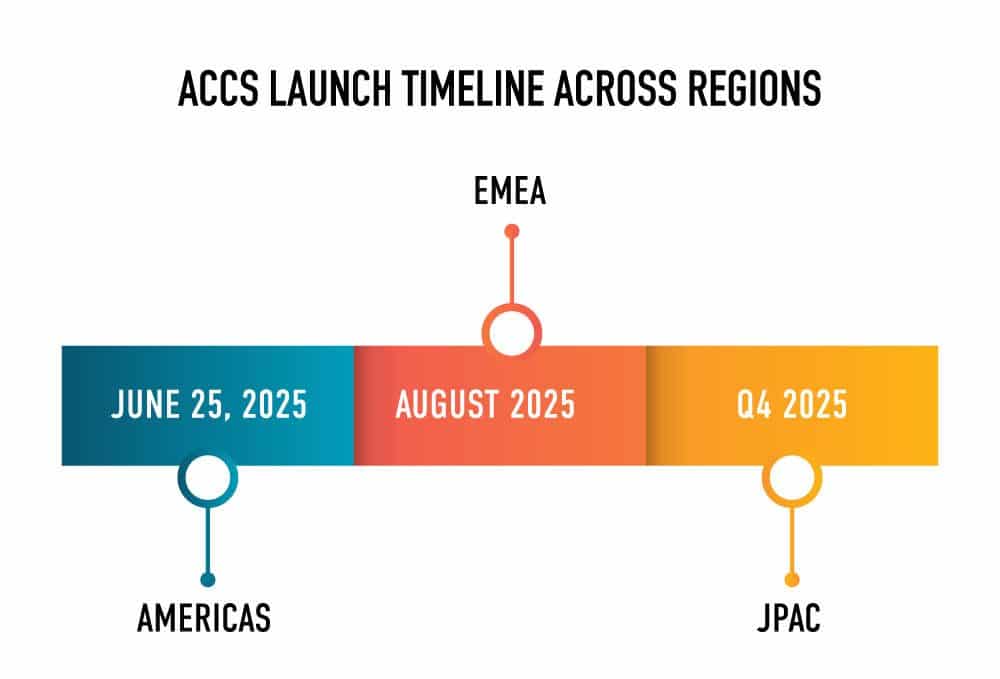
Global rollout timeline showing ACCS launch dates by region.
Many businesses using older commerce platforms face limitations, such as frequent maintenance and high IT support requirements. ACCS is designed to provide automated updates and scalable infrastructure, reducing operational overhead. Organizations can allocate resources to new initiatives while maintaining system stability.
Key Advantages of ACCS Introduction
- Speed of Deployment: Provisioned in minutes, not weeks or months.
- Always Up-to-Date: Updates managed by Adobe with no extra work for IT teams.
- Global Scalability: A single platform can handle expansion across brands and regions.
- Focus on Growth: ACCS automates maintenance tasks, allowing teams to dedicate more time to operational and strategic activities.
For companies offering Adobe Commerce development services, these benefits mean happier clients.
How is ACCS Different from Traditional Commerce Platforms?
ACCS is not an upgrade to Adobe Commerce. It is a redesign for a cloud-first world. The platform includes built-in personalization and faster storefronts. It also offers tools powered by generative AI. These capabilities are now standard in advanced eCommerce development services.
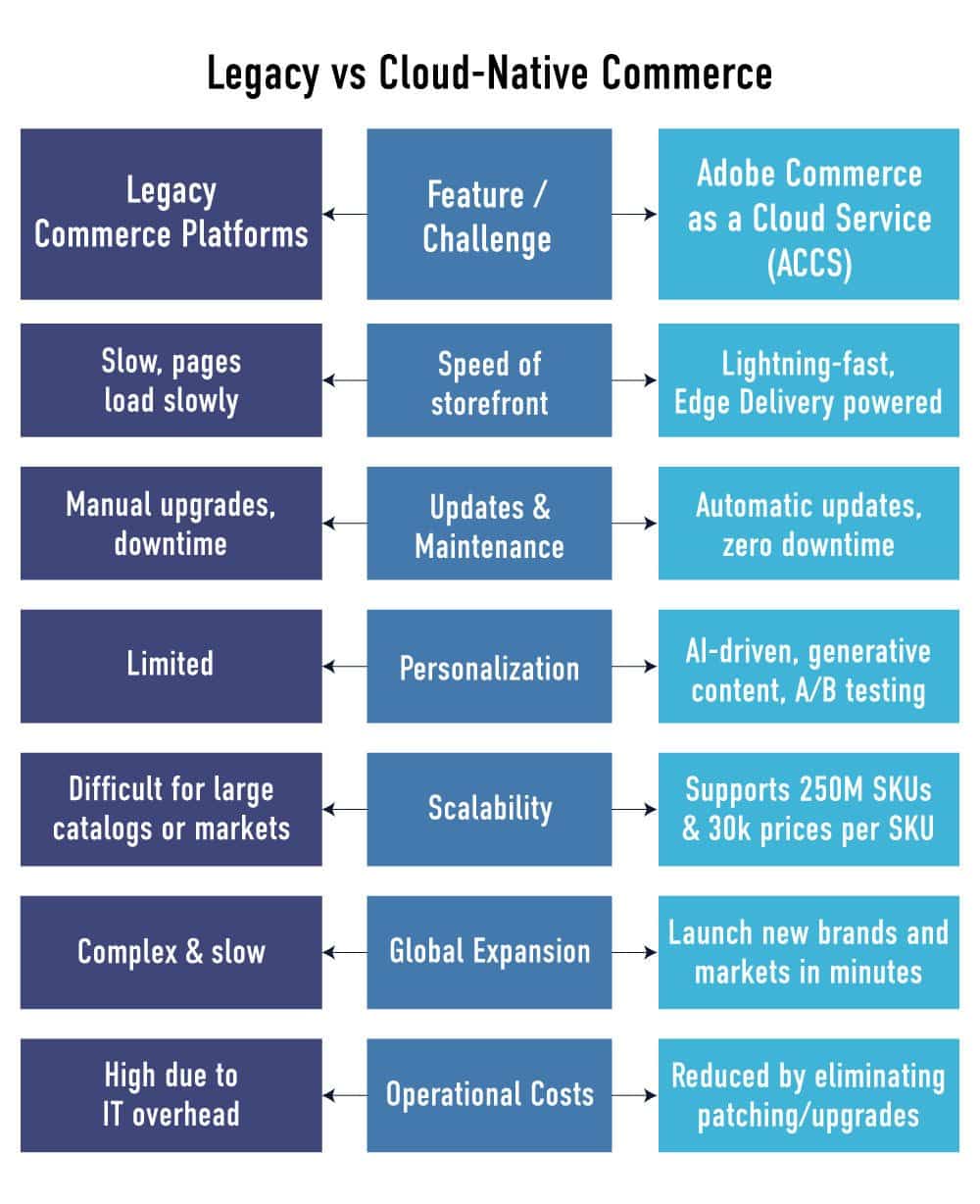
Comparison of legacy limitations versus ACCS speed and scalability.
Traditional platforms demand manual upgrades and long maintenance cycles. ACCS works as a living system where updates are delivered continuously. Teams always run the latest features. This approach lowers total cost of ownership and speeds up return on investment.
Why is ACCS Different?
Adobe Commerce as a Cloud Service is more than new software. It is a platform built for speed, scale, and personalization. The SaaS model is central. Businesses no longer need to dedicate time to system upkeep. They can shift resources toward customer experience and revenue growth.
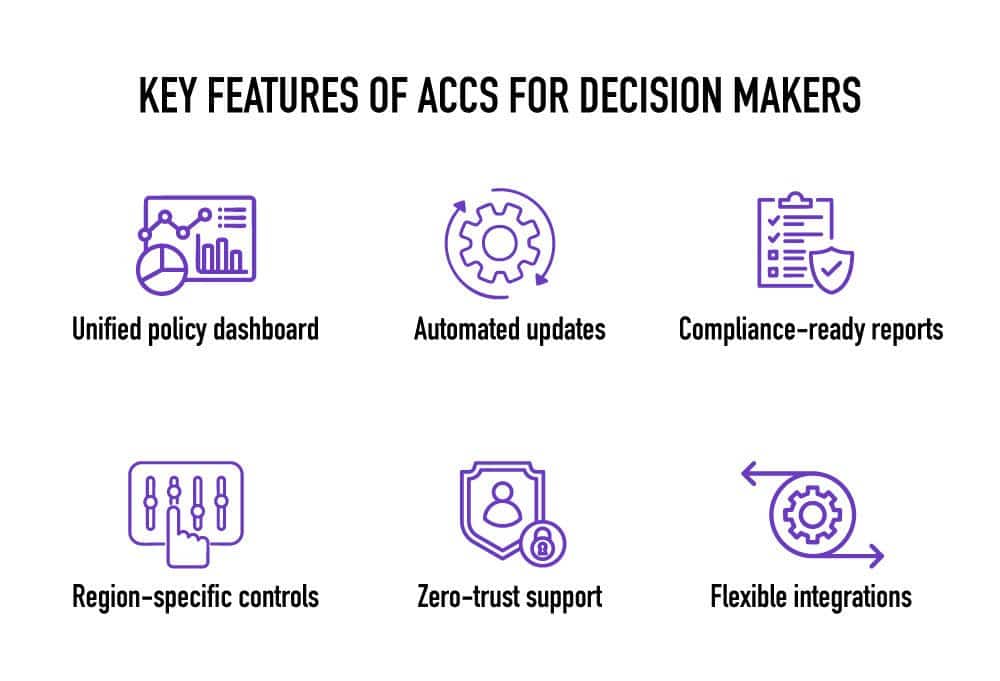
Six core ACCS features designed for enterprise decision makers.
The platform creates advantages that traditional commerce systems cannot:
- Lightning-Fast Storefronts: Edge Delivery loads pages quickly. This improves search visibility and boosts organic traffic.
- AI-Driven Content Creation: Generative AI enables personalized journeys and built-in A/B testing.
- Native Asset Management: Adobe Express and Firefly simplify editing and product content workflows.
- Massive Catalog Scalability: A single instance supports up to 250 million SKUs with 30,000 prices per SKU.
- Always-On SaaS: Automatic updates replace patches and upgrades.
Decision-makers see gains in core areas. Faster sites raise conversion rates by 4 to 8 percent. Teams enter new markets without heavy IT work. Costs drop as downtime and maintenance are removed.
What is the Core Product Messaging for ACCS?
Adobe Commerce as a Cloud Service (ACCS) is Adobe’s cloud-native commerce solution. The product message focuses on three themes that matter to business leaders: conversion, expansion, and cost control.
The idea is simple. ACCS helps brands grow faster, scale with less effort, and spend less time on infrastructure. This aligns perfectly with how modern eCommerce development services support business growth.
ACCS Product Messaging in Focus
- Supercharge Conversion: Faster storefronts and AI merchandising create experiences that lift GMV.
- Expand Faster, Operate Smarter: Launch brands or global stores in minutes. Scale without friction and boost team output with generative AI.
- Lower Costs, Increase Agility: Always-on SaaS cuts maintenance and upgrade bills. It also provides continuous access to new features.
This is not about technology alone. ACCS moves teams from maintenance work to growth work. We have seen leaders use that shift to move budgets from upkeep into market expansion.
What features make ACCS valuable to enterprises?
ACCS delivers capabilities that legacy commerce platforms do not. It gives faster storefronts. It powers AI driven content creation. It includes integrated digital asset management. It scales catalogs to massive sizes. It runs on a SaaS model that stays current. Each capability helps enterprises grow while lightening operational load.
Key Features Explained
- Lightning-Fast Storefronts: Edge Delivery makes pages load fast and steady. That improves search rank and conversion.
- Generative AI Content Tools: Merchandisers test ideas fast. They create journeys and launch campaigns quickly.
- Native Digital Asset Management: Adobe Express and Firefly let teams edit images. They prepare product content easily.
- Scalable Catalog Service: One instance can hold up to 250 million SKUs, with 30,000 prices per SKU.
- Always-On SaaS Platform: Updates arrive automatically so teams do not manage patches or plan upgrades. IT overhead becomes lower.
Decision-makers value these features because they focus on speed and personalization. They also improve cost efficiency. ACCS enhances all without adding infrastructure risk.
How does ACCS support real-world use cases?
The platform is designed for both B2B and B2C scenarios. Enterprises can build portals, expand into direct-to-consumer channels, or create omnichannel experiences. ACCS supports multiple commerce models in a single system. This flexibility benefits agencies offering Adobe Commerce development services and their clients worldwide.
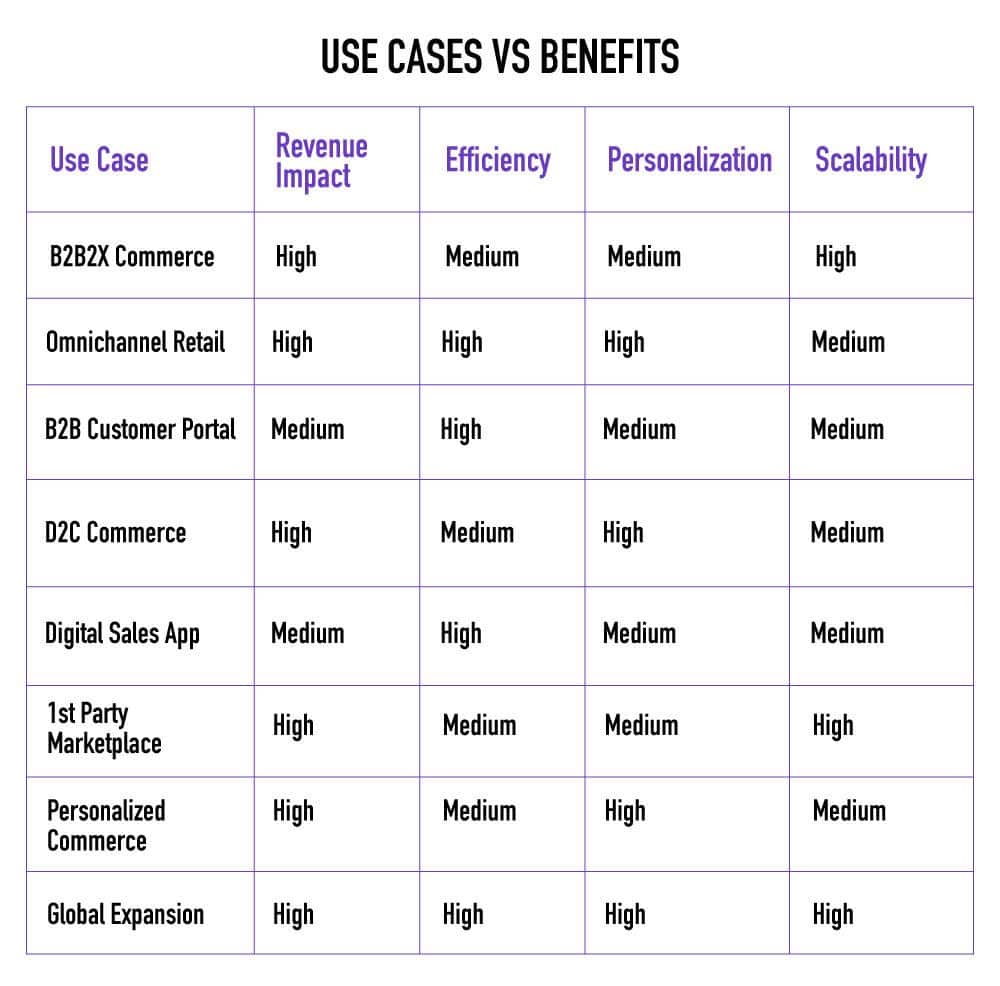
Use cases mapped to revenue, efficiency, personalization, scalability impact.
Use Cases in Focus
- B2B2X Commerce: Enable partner-driven sales to both B2B and B2C customers.
- Omnichannel Retail: Connect web, mobile, kiosks, and marketplaces into one seamless journey.
- B2B Customer Portal: Provide self-service access to catalogs, pricing, and order support.
- Direct-to-Consumer: Build direct brand experiences and collect first-party data.
- Digital Sales App: Equip sales teams with assisted buying, digital catalogs, and quoting tools.
- First-Party Marketplaces: Expand assortments and open new marketplace revenue streams.
- Personalized Commerce: Tailor experiences across advertising, storefronts, and post-sale engagement.
- Global B2B and B2C: Manage worldwide commerce on a single platform.
These use cases show how ACCS can support B2B2X commerce, omnichannel retail, direct-to-consumer channels, and global enterprise operations.
Which brands are proving the value of ACCS?
Global organizations use Adobe Commerce as a Cloud Service (ACCS) for both B2B and B2C commerce. The platform is designed to support enterprise-scale operations. Some of these organizations also work with eCommerce development experts to implement and optimize their deployments.
Global Enterprises Using Adobe Commerce
- Coca-Cola Africa: Driving digital engagement while managing diverse markets.
- Lexmark: Handling complex B2B transactions with efficiency.
- Casio: Running large consumer catalogs with speed and accuracy.
- ABB: Delivering industrial commerce with scale and personalization.
- L’Oréal: Managing multi-region commerce with strong content tools.
- Toyota North America: Integrating digital retail into customer buying journeys.
- Tesco Mobile: Offering customers smooth account and purchase experiences.
- Nissan and SlingTV: Running high-traffic storefronts with reliable scale.
What does this adoption tell business leaders?
Global organizations use Adobe Commerce as a Cloud Service (ACCS) for both B2B and B2C commerce. The platform is designed to support enterprise-scale operations. Some of these organizations also work with eCommerce development experts to implement and optimize their deployments.
How should sales and marketing teams present ACCS?
Sales and marketing teams need concise messaging. Decision-makers want clarity, not technical jargon. Adobe positions ACCS as a way to grow faster, operate smarter, and lower long-term costs. That message works because it connects business outcomes with technology capabilities.
- Deliver high-performance, personalized storefronts that increase conversion.
- Expand rapidly across brands and geographies with flexible catalog support.
- Boost merchandising with generative AI, built-in testing, and digital asset management.
- Eliminate upgrade costs while cutting maintenance through a secure SaaS model.
This simple framing makes it easier for sales teams to speak to business outcomes rather than features.
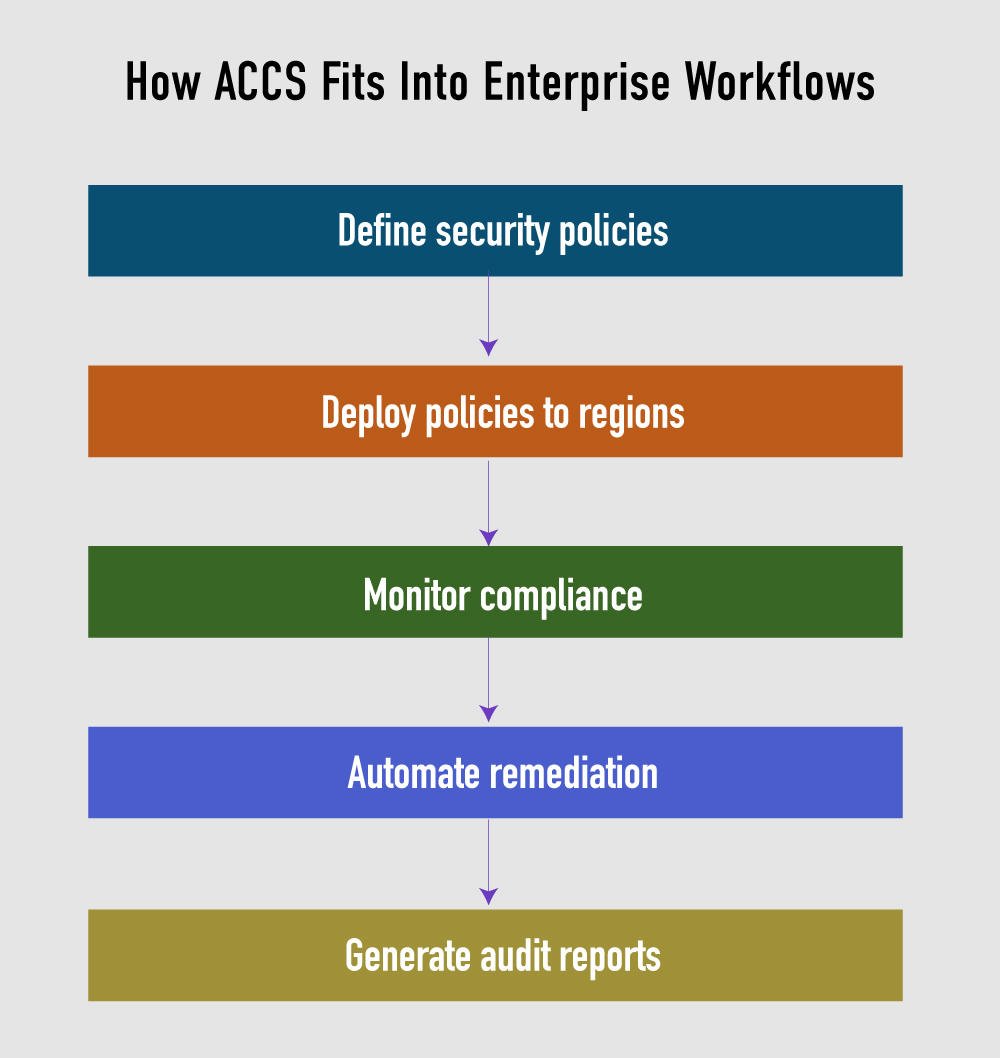
Step-by-step workflow showing how ACCS integrates with enterprises.
Why does ACCS create strategic value in 2025?
Executives are navigating growth pressure, rising costs, and tighter customer expectations. Adobe Commerce as a Cloud Service (ACCS) creates value by reducing the time spent on operations. It shifts energy to innovation and customer experience. It also drives revenue growth while giving continuous access to new features. These are also the goals of most Adobe Commerce development services today.
Strategic Value by Role
- For B2B Leaders: Scales global catalogs and delivers secure self-service portals.
- For B2C Leaders: Improves personalization and lifts conversion through faster storefronts.
- For IT Teams: Removes the need for patches or upgrades, freeing resources for innovation.
- For CMOs: Enables data-driven campaigns and effective use of first-party data.
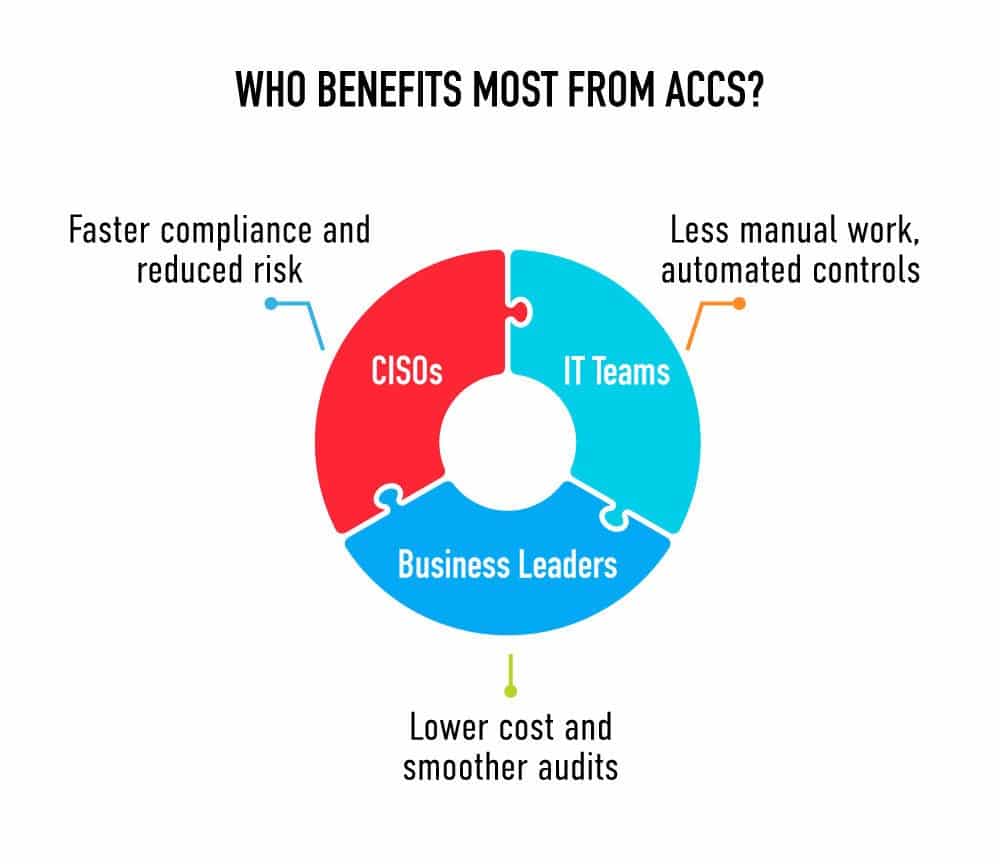
Key beneficiaries include CISOs, IT teams, and business leaders.
What is the future outlook for ACCS?
The future outlook is clear. SaaS-first commerce will dominate. Enterprises want platforms that are fast, scalable, and continuously updated. ACCS places Adobe at the center of this shift. It joins cloud reliability with AI personalization and enterprise flexibility. The same approach is used by top eCommerce development services worldwide.
Why should leaders consider ACCS today?
Adobe Commerce as a Cloud Service (ACCS) helps enterprises reduce costs, accelerate growth, and respond faster to market changes. Decision-makers can leverage ACCS to move to SaaS smoothly and scale their operations efficiently.
Learn how Ziffity can help your business implement ACCS and drive faster growth.